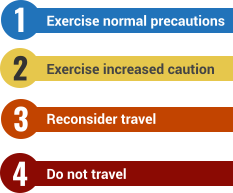
There was no change to the advisory level or risk indicators. Areas of increased risk were modified to reflect current travel restrictions for U.S. embassy personnel. Advisory summary was updated.
Reconsider travel to Ethiopia due to unrest, crime, kidnapping, terrorism, landmines, communications disruptions, and exit bans. Some areas have increased risk. Read the entire Travel Advisory.
Do Not Travel To:
- Tigray region and border with Eritrea due to armed conflict, unrest, and crime.
- Specific areas within the Afar region due to armed conflict, unrest, and crime.
- Amhara region due to armed conflict, unrest, and crime.
- Gambella region due to crime, ethnically motivated violence, kidnapping, armed conflict, and unrest.
- Benishangul Gumuz region due to crime, kidnapping, armed conflict, and unrest.
- The Oromia region, with the exception of Bishoftu and Bale Mountains National Park due to armed conflict, ethnically motivated violence, and unrest.
- Specific areas within the Central Ethiopia Region due to unrest.
- Specific areas within the South Ethiopia Region due to armed conflict and unrest.
- Specific areas within the Southwest Ethiopia Region due to armed conflict and unrest.
- Specific areas within the Somali region due to terrorism and unrest.
- Border with Somalia due to terrorism, kidnapping, and landmines.
- Borders with Sudan and South Sudan due to crime, kidnapping, unrest, and armed conflict.
- Border with Kenya due to terrorism, armed conflict, and unrest.
- Border area with Eritrea due to the possibility of armed conflict and unrest.
Advisory summary:
Unrest
The security situation in Addis Ababa is stable. However, there is sporadic violent, armed conflict, and civil unrest outside of Addis Ababa.
- The security situation may worsen suddenly without warning.
Communications disruptions
- Internet, cellular data, and phone services are often restricted or shut down before, during, and after unrest.
- These disruptions affect the U.S. embassy’s ability to communicate with Americans in Ethiopia and delay consular services.
Limited consular services for U.S. citizens
- U.S. government employees working in Ethiopia need special authorization to travel to most locations outside of Addis Ababa due to safety risks.
- Due to travel restrictions, the U.S. embassy has limited access to U.S. citizens arrested or detained in Ethiopia. Routine consular services are only available at the embassy.
- Ethiopian law does not recognize dual citizenship. There are often delays in notifying the U.S. embassy of an arrest for dual U.S.-Ethiopia nationals.
Exit bans that prevent departure
- You are subject to local laws. If you break Ethiopian laws – even by mistake – you could face deportation, fines, imprisonment, or an exit ban. Exit bans prevent travelers from leaving.
- As noted, Ethiopian law does not recognize dual citizenship. Research Ethiopian entry and exit requirements and immigration law if you travel. Dual citizens who have entered Ethiopia on their Ethiopian passports have been heavily fined after government authorities discovered they also held U.S. passports. Ethiopian law treats dual nationals as foreigners. Individuals who obtain their first U.S. passport while in Ethiopia, including children of U.S. citizens born in Ethiopia and documented with a Consular Report of Birth Abroad, should immediately obtain a visa or residency permit.
- The Ethiopian government imposes exit bans, including on minors, who have unpaid immigration fines and strictly enforces them.
- There have been cases where U.S. citizens have been assessed more than $100,000 in immigration fines and prevented from leaving Ethiopia until they resolved the fines.
Crime
- Petty crime is common, especially in popular tourist locations. Stay aware of your surroundings.
- Most crimes against foreigners are crimes of opportunity, like purse snatching and pickpocketing.
- Violent crime can occur and is more common after dark. Do not walk or drive at night.
Terrorism
There is risk of terrorist violence, including terrorist attacks and other activity in Ethiopia. Visit the U.S. Department of State’s country reports on terrorism to learn more.
Kidnapping
Criminal and terrorist groups are active in Ethiopia and have targeted foreigners for kidnapping.
The risk of kidnapping for ransom is highest in the following regions:
- Gambella
- Benishangul Gumuz
- Somalia border
- Sudan border
- South Sudan border
Landmines
Landmines and unexploded ordnance exist in the Somali region near the border with Somalia. The locations of landmines and unexploded ordnance are often not marked or easy to recognize.
Risks in specific areas
Level 4 – Do not travel
The following is true of every region listed below:
- U.S. government employees working in Ethiopia need special authorization to travel to the specific regions below due to safety risks.
- There is ongoing armed conflict and violence in these areas.
- Visit our website for advice if you decide to Travel to High-Risk Areas.
Tigray Region
- Do not travel to the Tigray Region including the border with Eritrea due to armed conflict, unrest, and crime.
- U.S. government employees working in Ethiopia need special authorization to travel to the Tigray Region due to safety risks.
- There is ongoing armed conflict and violence in these areas.
- Border roads with Eritrea are closed and conditions at the border may change without warning.
- Do not travel to the Tigray Region for any reason.
- Visit our website for advice if you decide to Travel to High-Risk Areas
Afar Region
- Do not travel within 30 km of the border with Eritrea due to armed conflict, unrest, and crime.
- U.S. government employees working in Ethiopia need special authorization to travel along the border with Tigray and Amhara in the Afar Region due to safety risks.
- Visit our website for advice if you decide to Travel to High-Risk Areas.
Amhara Region
- Do not travel to the Amhara Region due to armed conflict unrest, kidnapping, and crime
- U.S. government employees working in Ethiopia need special authorization to travel to the Amhara Region due to safety risks.
- There is ongoing armed conflict and violence.
- Do not travel to the Amhara Region for any reason.
- Visit our website for advice if you decide to Travel to High-Risk Areas.
Gambella Region
- Do not travel to the Gambella Region due to crime, ethnically motivated violence, kidnapping, armed conflict, and unrest.
- U.S. government employees working in Ethiopia need special authorization to travel to the Gambella Region due to safety risks.
- There is a high risk of ethnic conflict and related armed conflict and violence.
- Do not travel to the Gambella Region for any reason.
- Visit our website for advice if you decide to Travel to High-Risk Areas.
Benishangul Gumuz Region
- Do not travel to the Benishangul Gumuz Region due to crime, kidnapping, armed conflict, and unrest.
- Do not travel to the Benishangul Gumuz Region for any reason.
- Visit our website for advice if you decide to Travel to High-Risk Areas.
Oromia Region – Specific Areas
- Do not travel to Horro-Guduru Wollega, East Wollega, West Wollega, Kelem Wollega, Illubabor, Oromia North Shewa, West Shewa, East Shewa, East and West Arsi, Borena, Guji, East and West Hararghe, Buno Bedele, and parts of Oromia North Shewa zone and Jimma zone due to risk of armed conflict, kidnapping and unrest.
- U.S. government employees working in Ethiopia need special authorization to travel to Horro-Guduru Wollega, East Wollega, West Wollega, Kelem Wollega Illubabor, West Shewa, East Shewa, East and West Arsi, Borena, Guji, East and West Hararghe, Buno Bedele and parts of Oromia North Shewa zone (except for the area within 10 kilometers of Highway A2, up to 40 kilometers from Addis Ababa city limits) due to safety risks.
- There is a high risk of political and ethnic conflicts and related armed conflict and violence.
- There is very high risk of unexpected armed conflict in:
- North, West, and Southwest Shewa. This is the area to the immediate north and west of Addis Ababa.
- The Boset and Fentale woredas of East Shewa zone between Welenchiti and Awash.
- The Guji zone to the east of Bule Hora
- Do not travel to these areas for any reason.
- Visit our website for advice if you decide to Travel to High-Risk Areas.
Central Ethiopia Region-Specific areas
- Do not travel to the Central Ethiopia Region due to ethnically motivated unrest.
- Do not travel to the Gurage zone in Central Ethiopia Region for any reason.
- Visit our website for advice if you decide to Travel to High-Risk Areas.
South Ethiopia Region-Specific Areas
- Do not travel to Amaro, Derashe, Konso, Burji, and Gedeo zone in the South Ethiopia Region due to ethnically motivated conflicts and unrest.
- U.S. government employees working in Ethiopia need special authorization to travel to Amaro, Derashe, Konso, Burji, and Gedeo zone of the South Ethiopia Region due to safety risks.
- There is a high risk of ethnic conflicts and related armed conflict and violence.
- Do not travel to the specific areas in South Ethiopia Region for any reason.
- Visit our website for advice if you decide to Travel to High-Risk Areas.
Southwest Ethiopia Region-Specific area
- Do not travel to Maji zone in the Southwest Ethiopia Region due to unrest.
- U.S. government employees working in Ethiopia need special authorization to travel to Maji zone in the Southwest Ethiopia Region due to safety risks.
- There is a high risk of ethnic conflicts and violence.
- Do not travel to the Maji zone of the Southwest Ethiopia Region for any reason.
- Visit our website for advice if you decide to Travel to High-Risk Areas.
Somali Region-Specific Areas
- Do not travel to the zones of Liban, Afder, Shabele, and Korahe in the Somali region
- U.S. government employees working in Ethiopia need special authorization to travel to the zones of Liban, Afder, Shabele, and Korahe in the Somali region.
- There is a high risk of violence and conflict.
- Do not travel to the zones of Liban, Afder, Shabele, and Korahe zones of the Somali region for any reason.
- Visit our website for advice if you decide to Travel to High-Risk Areas.
Border with Somalia
- Do not travel within 50 kilometers of the border area with Somalia due to risk of terrorism, kidnapping, and landmines.
- U.S. government employees working in Ethiopia need special authorization to travel to the border area with Somalia due to safety risks.
- Terrorists are active in Somali towns near the border with Ethiopia. There is a high risk of cross-border attacks and kidnappings.
- Landmines are present in this region. The locations of landmines and unexploded ordnance are often not marked or easy to recognize.
- Do not travel to the border area with Somalia for any reason.
- Visit our website for advice if you decide to Travel to High-Risk Areas.
Border with Sudan and South Sudan
- Do not travel within 50 kilometers of the border areas with Sudan and South Sudan due to crime, kidnapping, armed conflict, and unrest.
- U.S. government employees working in Ethiopia need special authorization to travel to the border area with Sudan and South Sudan due to safety risks.
- Sporadic violent conflict is common.
- The highest risk areas include but are not limited to:
- The Nuer Zone and the Jore Woreda of the Agnuak Zone in the Gambela region
- The Pawe, Guba, Dangur, Dibati, and Bulen woredas
- The Metekel zone in the Benishangul Gumuz Region
- Do not travel to the border areas with Sudan and South Sudan for any reason.
- Visit our website for advice if you decide to Travel to High-Risk Areas.
Border with Kenya
- Do not travel within 50 kilometers of the border areas with Kenya due to terrorism, armed conflict, and unrest.
- This includes but is not limited to the Borena zone and surrounding areas.
- U.S. government employees working in Ethiopia need special authorization to travel to the border area with Kenya due to safety risks.
- Al-Shabaab and other terrorists are active in this area.
- There is a high risk of political and ethnic conflicts and related armed conflict and violence.
- Do not travel to the border areas with Kenya for any reason.
- Visit our website for advice if you decide to Travel to High-Risk Areas.
Border with Eritrea
- Do not travel within 30 km of the Afar Region border with Eritrea due to armed conflict, unrest, and crime. This does not include the Danakil Depression.
- Do not travel to the Tigray Region, including the border with Eritrea, due to armed conflict, unrest, and crime.
- U.S. government employees working in Ethiopia need special authorization to travel to the Ethiopian border with Eritrea due to safety risks.
- Border roads between Ethiopia and Eritrea are closed and conditions at the border may change without warning.
- Do not travel to the border area with Eritrea for any reason.
- Visit our website for advice if you decide to Travel to High-Risk Areas.
If you decide to travel to Ethiopia:
- Enroll in the Smart Traveler Enrollment Program (STEP) to get important updates and alerts from the U.S. embassy or consulate. Enrolling helps the U.S. embassy or consulate contact you or your emergency contact in an emergency.
- Review the Country Security Report for Ethiopia.
- Whether you’re a first time or frequent traveler, use the Traveler’s Checklist.
- Visit the Centers for Disease Control and Prevention (CDC) page for latest Travel Health Information for Ethiopia.
- We highly recommend that you buy travel insurance before you travel. Check with your travel insurance provider about evacuation assistance, medical insurance, and trip cancellation coverage.
- Review our information on Travel to High-Risk Areas.
- Monitor local media for breaking events. Be prepared to adjust your plans.
- Stay aware of your surroundings.
- Review our information on Crime Abroad and for Victims of Crime.
- Stay alert in locations frequented by foreign travelers.
- Carry a copy of your passport and visa and leave originals in a safe place.
- Have evacuation plans that do not rely on U.S. government assistance. Review our information on Crisis and Evacuations.
- Medical services for routine and emergency procedures are limited. Read the Health section of the Travel Guidance on this page for more information.