

Travel.State.Gov >
International Travel > Learn About Your Destination > Nicaragua International Travel Information

There was no change to the advisory level. Advisory summary was updated.
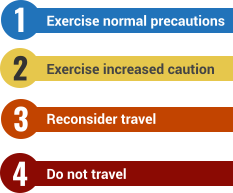
Reconsider Travel to Nicaragua due to risk of crime, health, wrongful detention, and arbitrary enforcement of local laws.
Advisory summary
U.S. government employee travel restrictions
Non-personal service contractors traveling to Nicaragua on official U.S. government business must travel on a service passport starting April 15, 2026.
Wrongful Detention
The U.S. Department of State has determined that U.S. nationals are at serious risk of wrongful detention by the Government of Nicaragua. Wrongfully detained U.S. nationals may be held in prison for years, in poor conditions, and without due process or consistent access to U.S. government staff or their family. Familiarize yourself with and respect local laws and customs but be aware that local laws are often applied arbitrarily to those who are seen as government opponents. Foreign travelers may face an increased risk of detention and harassment, even if you are also a citizen of Nicaragua.
The U.S. embassy will work to monitor your health and safety in detention but cannot guarantee your release. Most U.S. nationals who are convicted of committing a crime overseas serve out their sentences in prisons in that country.
Arbitrary enforcement of local laws
Some U.S. citizens have been detained for several weeks or more. Offenders of some crimes can face 50 or more years in prison. The embassy cannot guarantee your release.
The Government of Nicaragua has imposed some exit bans on U.S. citizens that prevent them from leaving the country without a fair and transparent process under the law.
Authorities carry out expulsions, arrests, revocations of Nicaraguan citizenship, and other actions:
U.S. citizens may be denied entry or prevented from leaving Nicaragua without explanation. The Nicaraguan government has targeted:
Crime
Violent crime, including robberies, sexual assault, and murder can occur anywhere in Nicaragua.
Health
Medical services for routine and emergency care are limited. Comprehensive quality healthcare is available only in Managua. Medical clinics outside of Managua lack basic resources and supplies.
Natural Disaster
Nicaragua regularly experiences hurricanes and tropical storms, earthquakes, and volcanic eruptions. Review our information on weather and natural disasters in Nicaragua.
If you decide to travel to Nicaragua:
Length of stay.
One page per stamp.
No (90 days or fewer). Tourist card at airport. See Entry, Exit & Visa Requirements below.
Yellow fever (in some cases, see Entry Requirements section).
Must declare $10,000 USD or more in cash.
None.
Km 5 ½ Carretera Sur
Managua, Nicaragua
Telephone: +(505) 2252-7100
Emergency After-Hours Telephone: +(505) 2252-7100
Fax: +(505) 2252-7250
Email: ACSManagua@state.gov
Email: ACSManagua@state.gov
The Government of Nicaragua has denied entry to and expelled U.S. citizens. This includes dual U.S.-Nicaraguan citizens and individuals that previously traveled to/from Nicaragua without incident. The government targets real or perceived opponents to the Government of Nicaragua. Those targeted include:
The Nicaraguan government has revoked foreigners’ residency status. It has revoked status for actions or expressions it perceives as political. The government has arrested, denied permission to travel, and prevented individuals from leaving the country for political reasons. Immigration authorities regularly review social media for evidence of political expression or activity and warn against such activities.
Requirements for Entry: To enter Nicaragua, you need a U.S. passport that is valid for your length of stay. All visitors must pay $10 USD in cash for a tourist entry stamp upon arrival (exact change is recommended.). The stamp is valid for up to 90 days.
Requirements for Exit:
Minors: See the U.S. Embassy website for information regarding departure requirements for children under 18 who also are Nicaraguan citizens.
Prohibited Items: Drones and similar devices are prohibited. They will be seized by customs authorities upon arrival. Customs may also seize photography equipment, videography equipment, and binoculars. There is no mechanism to retrieve these items later. Nicaraguan government authorities may also search personal phones, computers, electronics, and documents for anti-government content. They also sometimes seize such private property. For more information, see “Customs Regulations” below. Additionally, the transportation of arms or items that may be considered law enforcement or military equipment is strictly prohibited without written approval from the Nicaraguan government. Do not transport any arms or items that may be considered law enforcement or military equipment. Such items include, but are not limited to:
All U.S. citizens, including U.S. government, military, and contractor personnel found to be carrying such items, even in the smallest quantities, will be arrested and face strict criminal penalties. Penalties including imprisonment, large monetary fines, forfeiture of the items, and deportation. This is regardless of whether airlines and/or U.S. authorities allowed the items shipment on a U.S.-originating flight.
Advanced Coordination Required for Volunteer Groups: Please note that since 2018 the Government of Nicaragua has closed more than 5,300 NGOs and charitable organizations, including religious organizations. Groups engaged in these types of activities, including the apolitical provision of basic services, may be denied entry. You should email both the Nicaraguan Embassy in the United States (asistente.emb@embanic.org) and the Nicaraguan Ministry of Foreign Affairs (enlace@cancilleria.gob.ni) to inform them of your trip and secure advance permission if you are leading one of the following types of trips, even if your group has worked in Nicaragua previously or has a local office:
IMPORTANT: Even with a visit approval, the Government of Nicaragua may rescind the decision without advance notice.
For the latest visa and entry requirements, visit the Nicaraguan Immigration website (Spanish only).
HIV/AIDS Restrictions: The U.S. Department of State is unaware of any HIV/AIDS entry restrictions for visitors or foreign residents in Nicaragua.
Dual Nationality and International Parental Child Abduction: Find information on dual nationality, prevention of international child abduction, and customs regulations on our websites.
COVID-19 Information: Travelers arriving in Nicaragua do not need to provide proof of vaccination or a negative COVID-19 test.
The Government of Nicaragua is authoritarian. It limits freedom of expression and peaceful assembly. It represses internal dissent, and it monitors and responds to perceived threats to its authority. Nicaragua’s Sovereign Security Law and its Terrorism and Money Laundering Law allow for discretionary interpretation of often vaguely defined unlawful activities. For example, threatening the peace and economic stability of Nicaragua. Convictions under these laws have often been arbitrary. They result in long prison sentences and loss of assets (money and property). They also result in deportations with bans on returning to Nicaragua.
Nicaraguan authorities and armed civilians in plain clothes known as “para police” may monitor, detain, deny entry to, expel, or question U.S. citizens concerning their activities. This includes U.S. citizen contact with Nicaraguan citizens. Visitors should avoid any commentary on Nicaraguan politics or governance.
The Nicaraguan government may detain or expel individuals for activities that would not be considered criminal or offensive in the United States. Nicaraguan authorities have subjected U.S. citizens, including dual U.S.-Nicaraguan citizens, to prolonged detentions. The detentions are often politically motivated or arbitrary. Especially in politically motivated arrests, the judicial process has regularly been criticized as neither fair nor transparent.
Demonstrations or strikes may occur throughout the country; in the past, the Nicaraguan government has violently suppressed them. Avoid demonstrations, and exercise extreme caution around large gatherings.
Roads may be closed, and public transportation may be disrupted due to large crowds celebrating the following holidays:
Crime: Vehicle burglaries, pick-pocketing, and occasional armed robberies occur in store parking lots, on public transportation, and in open-air markets like the Oriental and Huembes Markets in Managua. Petty street crime is common. Police presence is limited outside of major urban areas. The Caribbean coast’s geographical isolation further limits the U.S. Embassy’s ability to provide emergency services to U.S. citizens living in or visiting the area.
International Financial Scams: See the Department of State and the FBI page for information.
Victims of Crime: Report crimes, including sexual assault, to the local police at 118 (Nicaraguan equivalent of “911,” in Spanish). Report serious crimes to the U.S. Embassy at 2252-7100 immediately and minor crimes during business hours.
The U.S. Embassy can:
Domestic Violence: U.S. citizen victims of domestic violence are encouraged to contact the U.S. Embassy for assistance.
Coastal Disputes: Be aware of the following border disputes:
Tourism: The tourism industry is unevenly regulated, and safety inspections for equipment and facilities are uncommon. Hazardous areas/activities are not always identified with appropriate signage, and staff may not be trained or certified. In the event of an injury, appropriate medical treatment is typically available only in major cities. In the event of a diving injury, the only hyperbaric chamber is in Puerto Cabezas, over 100 miles from Corn Island where most tourists dive. U.S. citizens are encouraged to purchase medical evacuation insurance. See our webpage for more information on insurance providers for overseas coverage.
Beach Safety: Exercise extreme caution at the beach. Strong undertows and currents make swimming in Nicaragua’s Pacific Coast extremely dangerous. This is true, even for experienced swimmers. U.S. citizens have drowned at Nicaraguan beaches, and in lagoons and lakes. Warning signs are not always posted. Lifeguards and rescue equipment are not normally available, and Nicaragua’s search and rescue capabilities are limited. Surfers and swimmers have been struck by boats at Nicaraguan beaches. This has resulted in serious injury and death. Carefully assess the potential risks of recreational water activities. Consider your physical capabilities and skills before swimming. Be aware that drinking alcohol and swimming can be a deadly combination.
Hiking in volcanic or remote areas is dangerous. Wear appropriate clothing and footwear. Carry sufficient food, water, and communication equipment. If you travel to remote areas, hire a reputable local guide. Nicaraguan law requires tourists to hire a local guide for most volcanic hikes. This includes the two volcanoes on Ometepe Island (Maderas and Concepcion).
Disaster Preparedness: Nicaragua is prone to earthquakes, hurricanes, floods, and volcanic eruptions. Plan for seeking emergency care, shelter, or evacuation routes. Many remote locations in the country lack good cell phone coverage.
Criminal Penalties: You are subject to local laws. If you violate Nicaraguan law, even unknowingly, you may be fined, expelled, arrested, or imprisoned. There are severe penalties, including imprisonment, for domestic violence, psychological abuse, and non-payment of child support. Furthermore, some crimes are also prosecutable in the United States, regardless of local law. For examples, see our website on crimes against minors abroad and the Department of Justice website.
Arrest Notification: Nicaraguan authorities do not always notify the U.S. Embassy when a U.S. citizen has been arrested or detained. This is especially true if the arrestee has dual nationality. If you are arrested or detained, ask both police and prison officials and friends and family to notify the U.S. Embassy. After the U.S. Embassy learns of an arrest, it may be several days or weeks before the Government of Nicaragua permits a consular official to visit. In the case of dual U.S.-Nicaraguan nationals, the U.S. Embassy may be denied consular access. See our webpage for further information.
Drug and Alcohol Enforcement: Penalties for possessing, using, or trafficking in illegal drugs in Nicaragua are severe. This includes charges for possession of small amounts of illegal drugs. Even with a prescription, marijuana is illegal in Nicaragua.
Purchasing Property: Be extremely cautious of investing in and/or buying property. Property rights and enforcement are notoriously unreliable in Nicaragua. The Nicaraguan Government has confiscated privately owned land or residences without warning. They do so without due process or compensation. Armed individuals have taken over privately-owned land. The Nicaraguan authorities may decline to evict those who illegally take possession of private property. U.S. citizens have been arrested or threatened over property disputes. See our website for more information.
Customs Regulations: U.S. citizens planning to import items should contract a recognized local customs broker for assistance well in advance of their visit. The U.S. Embassy is unable to assist with the customs or import process.
Faith-Based Travelers: See the following webpages for details:
LGB Travelers: There are no legal restrictions on same-sex relations or the organization of LGB events in Nicaragua. While violence against LGB travelers is uncommon, widespread discrimination exists. See our LGB Travel Information page and the Department of State’s Human Rights report for further details.
Non-Governmental Organizations (NGOs): The Government of Nicaragua has closed more than 5,300 NGOs, including religious and charitable organizations, since 2018. Employees and volunteers of NGOs and volunteers supporting NGOs may be denied entry to Nicaragua. Those in Nicaragua may be subject to investigation or expulsion. Nicaraguan Authorities have threatened U.S. citizens engaged in religious or charitable activities with arrest and opened questionable criminal investigations. Please see “Advanced Coordination Required for Volunteer Groups” above.
Political and Religious Activity: Participating in unauthorized political or religious activities, including public protests, sending electronic messages, or publishing social media critical of the government may result in detention and expulsion. It may also result in restrictions on future travel to Nicaragua. The Nicaraguan government has canceled large-scale religious events on short notice and has threatened organizers of these events with arrest. This has happened even after having originally permitted the activity to take place.
Social Media: Social media accounts may be monitored by the Government of Nicaragua. Nicaraguan authorities may deny entry to, investigate, or expel people whose social media accounts contain content they deem critical of the government, controversial, or that might involve illegal activity.
Sending Mail and/or Money to/from Nicaragua: You should expect that all your mail will be opened, reviewed, and catalogued by Nicaraguan authorities. Nicaraguan Customs authorities routinely intercept, review, and retain checks, money, and debit/credit cards shipped to Nicaragua through international couriers.
Travelers Who Require Accessibility Assistance: There is limited or no accessibility assistance for public transportation and in many public areas. There are few sidewalks and pedestrian road crossings. Nicaraguan law prohibits discrimination against persons with physical and mental disabilities. However, such discrimination is widespread in employment, education, access to health care, and the provision of state services.
Students: See our Students Abroad page.
Women Travelers: See our travel tips for Women Travelers.
Public and private hospitals in Nicaragua do not meet U.S. standards. Many hospitals are understaffed. Some hospitals may not be able to assist in emergencies. Only basic, limited emergency medical services are available outside Managua. Physicians and hospital personnel frequently do not speak English.
Managua has a sole private hospital that is JCAHO (Joint Commission on Accreditation of Healthcare Organizations) certified, with labs and radiology services available, though it has a very limited number of specialists for acute emergencies. Medical services outside Managua are limited, including for victims of crime. Government hospitals are understaffed and some hospitals throughout the country may not be able to assist in emergencies. Private hospitals and physicians expect up-front payment. This can be done with cash or credit card.
Ambulance services are not widely available. Training and availability of emergency responders may be below U.S. standards. Ambulances are not equipped with state-of-the-art medical equipment. They provide transportation and basic first aid only.
The Department of State does not pay medical bills nor medical evacuation (air ambulance) costs. U.S. Medicare/Medicaid does not apply overseas.
Medical Insurance
Make sure your health insurance plan provides coverage overseas. Even with health insurance, most care providers overseas require cash payments prior to providing service. See our webpage for more information on insurance providers for overseas coverage. We strongly recommend supplemental insurance to cover medical evacuation. Medical evacuation costs to the United States from Nicaragua can be expensive. It starts at $15,000 and goes up to $100,000 or more. The cost depends on the destination and level of care required.
If traveling with prescription medication, review the Nicaraguan Ministry of Health's Pharmacy Department web guidance page on entering with pharmaceuticals products. Always carry your prescription medication in original packaging labeled with your doctor’s prescribing information.
Tap water is not reliably potable. Drink only purified bottled water.
The following diseases are prevalent:
Vaccinations
Be up to date on all vaccinations recommended by the U.S. Centers for Disease Control and Prevention.
Air Quality
Air pollution can be a significant problem in many destinations overseas.
Further health information
Road Conditions and Safety: Main roads between major cities are generally paved and in good condition. Other roads may have potholes, lack shoulders, be poorly lit and narrow. Speed bumps are often poorly marked. During the rainy season, roads may become flooded or have additional damage. Horse carts, livestock, and pedestrians crossing roads in front of oncoming traffic are common. This happens even on major roads in the main cities. Most roads on the Caribbean coast are unpaved. Road signs throughout the country are limited or non-existent. Road travel after dark is hazardous in all areas. Carry a cellphone in case of emergency. However, understand cell reception may be spotty in many areas of the country. Do not drive outside urban areas after dark.
Traffic Laws: If you are involved in a traffic accident, you must wait for the police and insurance company representatives to arrive before you move your vehicle. However, especially during overnight hours, police and insurance companies may not respond. Do not move your vehicle until a police officer tells you to do so. Otherwise, you may be legally liable for the accident. If you receive a traffic violation, police may take your driver’s license until you pay the fine. Depending on your length of stay, you may not recover your license in a timely manner.
Nicaraguan law requires that police take a driver into custody for:
To avoid liability, consider hiring a professional driver through a reputable hotel.
All drivers must carry:
These regulations also apply to drivers in rental vehicles. Penalties for not having any of the above include fines and towing. For more information, check with the Nicaraguan National Police or the Embassy of Nicaragua.
Traffic Stops: Transit police often stop vehicles with either local or foreign license plates.
If transit police demand a bribe instead lieu of a fine, request a receipt and the officer’s name and badge number.
To report mistreatment by police, email a complaint to Nicaragua’s National Police and forward a copy to the U.S. Consular Section in Managua.
If you receive a traffic violation, police may confiscate your driver’s license until you pay the fine. Depending on your length of stay, you may not recover your license in a timely manner.
Public Transportation: Buses, moto-taxis, and ferries often lack proper safety equipment.
Airports in remote places often have short airstrips, minimal safety equipment, and little boarding security.
See our Road Safety page for more information and the Nicaraguan Institute of Tourism and National Transit Authority.
Aviation Safety Oversight: The U.S. Federal Aviation Administration (FAA) assessed the government of Nicaragua’s Civil Aviation Authority as compliant with International Civil Aviation Organization (ICAO) aviation safety standards for oversight of Nicaragua’s air carrier operations in 2015. Further information may be found on the FAA’s safety assessment page.
Maritime Travel: Mariners planning travel to Nicaragua should check for U.S. maritime advisories and alerts on the Maritime Administration website. Information may also be posted to the websites of the U.S. Coast Guard and the National Geospatial Intelligence Agency.
Review information about International Parental Child Abduction in Nicaragua. For additional IPCA-related information, please see the International Child Abduction Prevention and Return Act (ICAPRA) report.
Subscribe to get up-to-date safety and security information and help us reach you in an emergency abroad.
Recommended Web Browsers: Microsoft Edge or Google Chrome.
Make two copies of all of your travel documents in case of emergency, and leave one with a trusted friend or relative.
You are about to leave travel.state.gov for an external website that is not maintained by the U.S. Department of State.
Links to external websites are provided as a convenience and should not be construed as an endorsement by the U.S. Department of State of the views or products contained therein. If you wish to remain on travel.state.gov, click the "cancel" message.
You are about to visit: